Showing posts with label spark phd. Show all posts

Friday, August 30, 2013

Nothing is certain but death and Facebook algorithm changes


Yes that’s right – the algorithm has changed again. But unlike the changes made in September 2012 this round of changes has flown under the radar – perhaps overshadowed by the way more exciting (and easy to understand) announcement that pages can now run competitions without requiring a third party app.

That’s not to say that there isn’t still a place for the good ol’ app – which this infographic from allfacebook outlines really clearly. And of course there is still the minor issue of the law and the need to provide terms, conditions and privacy statements.

But I digress. The algorithm changes have flown under the radar because they are largely beneficial for most brand pages.

Previously Edgerank was based on three factors – affinity, weight and time decay – that determined whether any one status update would be seen by any one person. That’s now changed and there are reportedly a myriad of factors that are now taken into consideration. Two of the main ones being talked about are Last Actor and Story Bumping.

Last Actor looks at the last 50 interactions you’ve had on Facebook, then gives new posts from those people or brand pages priority on your newsfeed. Pages who post frequently will be rewarded – and those that are targeting the most active demographics need to post more frequently to stay visible.

But it’s not just about quantity. Facebook will also assess the quality of your post and demote content that is ‘engagement baiting’ just to get likes. Brands will need to come up with something better than ‘like this if you like fluffy kittens’ and the world will be a better place for it. Facebook haven’t quite said how they will do this, but brands that thrive on this type of content can expect to see engagement rates drop away.

The second factor – Story Bumping – works like this. If a page you regularly interact with posts some content and it’s getting good interaction, but you’ve found something more interesting to do than log onto Facebook every couple of hours causing that post to slip down your newsfeed – then don’t despair! Facebook will bump that post back up your newsfeed, givi
ng you a second chance to see content that it thinks you want to engage with. This is good news for brands – particularly those that still insist on posting status updates during business hours when only half of their fanbase is actually online.

There are many other factors that matter now. Anyone noticed Facebook prompting you to update sections on your info page? Yep, that’s taken into account too.

So how will these changes impact on brand page performance? We’ll probably never know because Facebook coincidentally rolled out their new insights platform just before the algorithm change. Virality no longer exists and has instead been replaced with the more all-encompassing ‘Engagement Rate’.
“What’s the difference?” I hear you ask. Quite a lot.

Virality took only the highest quality interactions – those that resulted in a story being created which shared your content with their friends – as being worth counting. All other interactions – usually called ‘other clicks’ in the exportable report – weren’t deemed valuable enough to include. Hence the rise of all those ‘like this if’ posts – unless people engaged in a certain way, they weren’t counted.
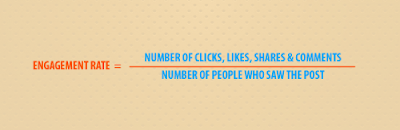
http://www.insidefacebook.com/2013/07/29/3-most-useful-metrics-in-the-new-facebook-insights/
Image courtesy of Inside Facebook
The new Engagement Rate – defined as “the percentage of people who liked, comments, shared or clicked on your post after having seen it” is broader, but more worthwhile. If someone clicks on a link through to your competition app (oh, except we don’t need them anymore) or another piece of content you wanted to share – that wouldn’t have been included in virality, but is included in the engagement rate. Someone clicking on an image you have shared because they want to see it in more detail is counted as engagement, but wouldn’t have been included in the old virality metric.

The sound of page admins around the world patting themselves on the backs for a job well done last month was deafening (I wonder how many truthfully explained the reasons for the better results in their reports). But with all the changes Facebook are rolling out, they’ll still need to work hard to make sure Facebook continues to deliver results for their clients.

Thursday, October 18, 2012

Facebook - It’s time to put up or shut up (and some tips on how to put up)

Recent changes to Facebook’s Edgerank algorithm has got a lot of people up in arms. Yet again, the social sky is falling. And yet again, I’m here to be the voice of reason.
I was lucky enough the other week to be in a room with some of the Facebook global team where the change to the algorithm was discussed so here’s my take on it all.
Alot of people are saying the change in algorithm combined with the introduction of promoted posts is designed to make brands spend more on paid media to prop up Facebooks revenue and share price. News flash. Brands always did have to spend money on paid media in order to build and maintain successful community.
Facebook say the main reason for the algorithm change is to ensure peoples newsfeeds are filled with the most interesting and relevant content for them. This makes sense - they have a billion customers that they need to keep happy. We’ve all missed that important/exciting status update from a friend because our newsfeed is full of posts from brands that we liked years ago, no longer interact with but are too lazy to unlike.
The impact of this change which was made on 20th September has been significant for those pages that aren’t supported with paid media spend. In some instances we’ve seen reach per status update drop by as much as 24 percentage points. For those pages that are supported by always on paid media, the impact has been minimal.
The good news is engagement rates – particularly virality – have doubled, if not tripled. This makes sense – if Facebook is showing status updates to less people, but those people are the ones most likely to engage, then of course engagement rates will increase.
What Facebook have done is nothing new. Take search as an example. You can put a lot of resource into SEO and use organic search to reach a small group of people who are likely to engage with your brand and not spend a cent on media. Or you can extend your search strategy using media budget to by paid search placements which extend your reach to a much broader – but arguably less interested – audience knowing that at least some of them will engage.
Facebook is no different. Focus on your conversation strategy and you’ll engage with a small group of brand loyalists. Invest in paid media and you’ll extend your reach to a broader, but less engaged, audience.
There are plenty of articles out there on how brands should respond to these changes. Here’s what I think:
1.    Differentiate between reach and engagement. Your conversation calendar drives engagement, your paid media drives reach and growth. If you aren’t supporting your page with paid media, you shouldn’t have reach or growth KPIs.
2.    Engagement is now critical. If you can't support your page with paid media, then you will need to build interactivity (like, comment, share, vote) into your status updates. This will ensure those you are reaching remain engaged, and when you hit that sweet spot with a post that gets great interaction rates your reach will extend to your wider fanbase.
3.    Treat your Facebook page like paid search. Have an always on media budget and upweight when you are in campaign. Buy reach through promoted posts and sponsored stories - but stick to targeting fans only and don't promote every single status update. Just pick the ones that are most important, engaging and on-brand - and make sure they encourage interaction.
4.    Consider your conversation calendar as your engagement strategy. Don’t just turn to building an app for everything. Think about whether you can use interactive conversation to achieve your objectives, or put your app development budget into creating other forms of content.
5.    Integrate your conversation calendar and your paid media schedule. If these are managed by two different people, tell them to get together regularly and plan how one can support the other to deliver the best possible result for the brand.
Brands have had it pretty good on Facebook. They’ve been able to build substantial communities of consumers and been able to engage with them like never before without huge investment. As result the playing field has been leveled - small brands can be just as powerful as their bigger competitors. 
So if brands want to continue to harness the power of Facebook, it’s time to put up. Put up the time. Put up the effort. And put up resources – both human and financial – that are needed to make this channel a success.

Friday, September 21, 2012

Rad Report #3

It's awards season, so here is:

My Judging Experience of Random Ads I Found
(I also bring to you today tales of Sasquatch and a Lady Pyramid… intrigued now aren’t you…)

SLURPEE
AUSTRALIA
This one ticks so many boxes: simplicity, user-generated ideas, word of mouth and definitely fun. 

Rather than identifying how to make the product different to the competitors Slurpee instead looked how they could make the experience different for the consumers by realising that the one thing that always stays the same with frozen drinks is the cup. 

But what if you could drink it out of a trumpet?  A megaphone?  A bathtub?  (Okay with that last one you’d probably have brain freeze and diabetes…)

Slurpee asked people what they’d use, and the best suggestions were made into an outdoor, instore and print campaign promoting a day where you could fill your own vessel for the price of a regular drink.

The day before the event they also did a nice little bit of guerrilla advertising using other companies’ outdoor ads.  The buzz generated and the results speak for themselves.


UNITED COLORS OF BENETTON
ITALY
Some of you may have already seen this one, but I think it’s a really fantastic message executed in a simple way that generates talkability (and controversy).

Benetton are famous not only for their fashion line but for a very open approach to a social responsibility of equality and peace.  The Unhate Foundation was created to overcome the culture of hate on a global level through basic understanding of difference in a pretty open and emotive way. 

Here’s the video: http://www.youtube.com/watch?v=S8N2GX6of2I and if you’ve got the time check out their page: http://unhate.benetton.com/

The campaign created a huge amount of controversy with a number of different groups as the central theme is the kiss, the most universal symbol of love, and Benetton ran creative featuring world political and religious leaders, such as Barack Obama and Chinese leader Hu Jintao, Pope Benedict XVI and Ahmed Mohamed el-Tayeb, the Palestinian president Mahmoud Abbas and the Israeli prime minister Benjamin Netanyahu.

They also ran guerrilla outdoor activity in Milan, New York, Paris and Tel Aviv, and Unhate went on to win the Press Grand Prix at Cannes.


FRIDAY FLUFF PIECE
JACK’S LINKS & FOOTLOCKER/ ADIDAS
USA

We all know creating a recognisable character association with a product can help to educate, inspire, entertain or personify the brand.  Whether that means celebrity brand ambassador or unique personality it can help the brand connect with the consumer.

You of course all know this after rushing out to buy Cornettos after seeing my awesome Cornetto bear, didn’t you… didn’t you...

Anyway, here are a couple of other brands that went for a… unique spokesman to make them memorable.

Okay fine, they’re also in here because I’m more than a little immature and personally find the words ‘sasquatch’ and ‘lady-pyramid’ hi-(wait-for-it)-larious.

Jack’s Links:                 

Footlocker/ ADIDAS:     


Happy Friday everyone!

Friday, September 7, 2012

Rad Report #2


Welcome to Issue 2 of the Rad Report.  Not all the campaigns are brand new, so if you’ve already seen them then feign interest for my ego’s sake.

MATTEL
USA

As the world appeared gripped in Olympic fever I was, of course, still watching MySkyed X-Games from a month or so ago. 

Amongst the awesome skate, BMX and Big Air comps there was also one of the coolest sponsorships/ PR stunts I’ve seen in a while.  I’m sure we all played with Hot Wheels at some point growing up (unsurprisingly I wasn’t really a Barbie kind of girl), and the gravity-defying loop was always the centre of any decent track.

Hot Wheels added their own highly anticipated event at this year’s X-Games by bringing on Rally car driver Tanner Foust and Hollywood stuntman Greg Tracy to set a world record by driving two Hot Wheels all-wheel-drive (isn’t that the same as 4–wheel-drive?) rally cars through the 66-foot tall Hot Wheels Double Loop Dare track at X Games LA. 

Branding heaven.

What 8 year old boy (and me) wouldn’t want a Hot Wheels set after seeing this!


4 out of 5 revs for bringing the brand to life.

SERVICEPLAN
GERMANY

Here at Spark we work hard to make campaigns great, sometimes I’m sure you’ve all felt like you’ve put your blood sweat and tears in to make the campaign a success.

Serviceplan, a creative agency in Hamburg, took this phrase a little literally when recruiting new staff through a pretty out-there (and not entirely hygienic) billboard campaign.

Company copywriters donated blood-samples which were pumped around tubing on a billboard to create lettering.  Designers sat in a mobile sauna and their sweat collected to be sprayed onto black fabric and the salt made the type.  Thirdly 3kgs of raw onions were used to make staff cry and the teary tissues were fixed to the billboard.

A QR code on the billboards linked to a micro-site about Serviceplan for interested applicants (their form of ‘TOGETHER’ is a little creepier than ours).

Well this one is, um, ‘creative’. 


1 out of 5 for staff treatment, 5 out of 5 for potential contamination from blood-born pathogens. 

Okay okay, sorry that one was a little wrong.  I’ll end on a positive note.

TROY LIBRARY
USA

The Troy library in Michigan was running low on funds and close to closing; the local council proposed to vote in a 0.7% tax increase to keep the library open, but the issue became more about taxes than the library itself and caused great debate.  With voting day near and negativity high about the tax increase the library officials took to social media in a controversial reverse-psychology WOM approach to change the public’s mind.

The campaign was picked up locally, nationally and even internationally and was a great result for minimal budget.

The video is a couple of minutes long but worth a watch http://www.youtube.com/watch?v=UeOmgyWsksc
*Spoiler* the library didn’t close.  Told you there was a positive ending.


5 out of 5 hypothetical matchsticks for getting people talking.

Happy Friday everyone!

Thursday, September 6, 2012

Is Facebook’s star fading for marketers?

The doomsday theorists have been at it again. If you listen to them, they’ll tell you that recent court action in both California   and Australia   signals the end of the world as we (ie. brands and marketers) know it for Facebook.
Once again, let me be the voice of reason:

Image borrowed from Wikipedia

1.       While the US ruling that Facebook should allow users to opt out of having their names used in social context is significant, we all know that only a small percentage of people actually opt out. Most won’t see it as an invasion of their privacy, or won’t care enough to invest the time in finding out exactly which box on which screen to tick to turn it off.

2.       The Australian ruling is also significant but here’s a newsflash for you – the same rules apply to Facebook as apply to other media. Has it ever been ok for a brand to create a conversation which results in laws being broken or people being offended? Case in point is the recent “vagina” ad, or the recent social campaign run by Hell Pizza – it didn’t take many complaints to get those taken off air and apologies issued. The one thing Facebook has on its side is that it’s search functionality sucks. Good luck to anyone who tries to search Facebook for slanderous things being said about them. However it is a timely reminder to assume that your competitors will be fans of your page and only too keen to report any misdemeanours.
3.       While we’re on the topic – it’s also never been ok to ‘take’ images from Google search and associate them with your brand without owning (or renting) the copyright. So what makes it ok for brands to do this on Facebook? I do agree there is a big difference between taking responsibility for the content posted by the brand, and the resulting comments posted by  fans – but there is also a connection between the two. If you don’t want your fans to slander competitors/celebrities/other brands – don’t create conversations that make this likely to happen.
For me these two court rulings signal one thing – social media is no longer the Wild West where anything goes. However it is also just another media and communications platform and as such can be governed by existing rules and legislation.
Keep calm, and carry on.

Monday, September 3, 2012

I Love Christmas - IAB / PWC 2nd Quarter Expenditure Report


It always feels like Christmas when the latest IAB PWC expenditure report comes out.  A Christmas that rolls around every three months. Not least of all as the presents, or rather the spend from market, just seems to increase each quarter.


It’s no different this Christmas, er, Quarter I mean.  Straight to some key numbers ay;

·         Q2 2012 $91.42m
o   7.1% increase YoY (Q2 2011 was at $84.15m)
·         Total spend by platform breaks down as
o   Display 32%  
o   Search and Directories 37%
o   Classifieds 31%
·         $3.64m spent on video
o   42% YoY increase
·         650k spent on mobile
o   156% YoY increase

So for the first time we’ve achieved a quarter that is north of $90m.  Which puts the industry on track for its first $100m quarter in six months time… just in time for Christmas proper.  PHDiQ are forecasting that digital will then go on to break through the $400m mark in 2013, lurching onwards and upwards to $489m by 2016, at the same time surpassing newspaper revenue.  And I think our trading director is being conservative – but I suppose I might be a bit biased.

While that news about newspapers isn’t going to surprise anyone, the performance of video is perhaps raising some eyebrows, contributing 12% of the total display revenue and helping push display closer to Search and Directories.  I’m predicting that with this growth in video will help push Display to be on par with Search & Directories by 2015.

Mobile, while barely out of its nappies at a modest 2% of total Display revenue in this report, will be another driving force in the next three to four years.  It will increase revenue exponentially as we see rapid update of smart phone penetration and cheaper data charges allowing rich media display, including video.  Another number from our trading director - $15m-$18m spend on mobile by 2016.  As a footnote, while penetration of smart phones is currently recorded at 40%, I think the more interesting number from a recent Google survey is that 20% of those with smart phones have only had them for between 0 – 3 months, suggesting we’re well on track to achieve considerable growth.

Roll on the next IAB PWC Christmas, set for release Nov 2012.

Friday, July 27, 2012

Why big isn't always better


Something Justin Flitter said at the recent Social Media and Mobile Apps conference got me thinking about the way brands approach social media.

What he suggested was:  in the real world our best friendships are made up of many lightweight interactions - and that brands who truly want to build a friendship with their fans might be more successful if they acted the same way.

Think about it like this. Say you made two new friends today. One of them you will only see once over the next three months spending a long weekend hanging out together. The other you hear from every other day – a quick text, a coffee or perhaps they comment on something you posted on facebook. Which person do you think you’ll have the better relationship with?

Now apply this to a brand:
Brand A puts a lot of time and effort into creating a whiz-bang new app – it’s cool and fun so you download it, but after a while the novelty wears off.  Brand B has a twitter account where they regularly share links to interesting and useful content. Which brand do you think you’ll have the better relationship with?

Delivering big ideas and big results is what every agency (and some clients) aspire to – but it shouldn’t be at the expense of doing the day-to-day well. 

In fact there is no reason why a successful social activation has to be big. At the same conference Mike Wilson from .99 explained how hard it is for agencies – and corporates – to pull together a truly integrated idea. When this does happen those involved deserve every award they win, but in the meantime go for something smaller and more perfectly formed.

Lots of small but clever interactions could deliver better engagement that one big all-singing, all-dancing, here-for-a-good-time-not-for-a-long-time activation. 

A lot of time, money and resource can go into creating a video which gives just one – or if you are lucky 2 – status updates to Facebook. It might be really clever and engaging, but once that status update is posted you’re back to wondering what to do with the other 364 days of the year on your conversation calendar.

Monday, July 2, 2012

Content sharing is not content curation.

“Curating” is the new buzzword around town, and like most new buzzwords their meaning can be easily misconstrued.
The other day I came across the “Second annual Content Curation Adoption Survey” informing me that “95% of Marketers are Curating”.
While I have no doubt a lot are through Twitter, Pinterest and other social networks, the penny dropped when I read that “of those respondents that indicated they had not knowingly curated in the past six months, 100 percent of them had, by sharing an article, blog post or other content with a prospect or customer”.

Breaking news: sharing an article with your facebook fans or twitter followers is not content curation.

Content curation involves gathering digital content from a range of sources and then sorting, art directing and representing that content in a way that creates an editorial experience. It’s not about creating, it’s about sifting through the raft of content available on a particular topic and presenting the best and most relevant pieces of information to your audience. It’s something you do regularly and consistently. There is nothing random or one-off about it.
So what makes for good curation? Google it and you’ll find a myriad of lists and opinions. My five favourite are:
Have a reason for being: knowing what your point is will make it easier to filter content, and to build an audience. It’s a bit like making a mix tape – knowing who it’s for and what you want to say makes picking the songs easy.
You can’t survive on curation alone: You will gain more credibility with your audience, and more support from other curators if you are also creating your own fresh and interesting content.
Give it the personal touch: automated curation tools are popping up all over the place but curation does require the personal touch to ensure quality content is being shared.
Quality not quantity: if time and resource is an issue then sharing quality content once a week will build more credibility than sharing rubbish content daily.
Become part of the ecosystem: always remember the content you are sharing is not yours! Always, credit your sources.
Content curation is a long term platform that needs a strategy behind it. If your objective is to become an authority on something, then you can only do this by building up a following of people who trust that authority.

Friday, May 18, 2012

Why I won’t be buying in the Facebook IPO

I was asked by a publisher recently where the most innovation would come from in the next three years.  My answer – it hasn’t been invented yet.  Sure, it sounds like a cop out, but  when you look at the exponential rate of change in the digital environment, predictions become unreliable and giants (even the mighty Facebook) seem less solid.

Consider these facts on the speed of adoption:


Whitefireseo.com


(the G+ reference is a bit of a misnomer – as Google migrated current users rather than building an audience from scratch).


So, if speed is anything to go by the current leaders should be invincible right?  Actually it could be their downfall.  George Anders describes it well in this post on Forbes.  He talks about something called the ‘liability of obolescence – a growing mismatch between an organization’s inherent product strategy and its operating environment over time’.

When ‘time’ becomes compressed, such as in the accelerating speed of change in digital, companies operating in that space have a much shorter natural lifecycle (AOL, Myspace, Bebo anyone?).  Sure there are companies that have survived, thrived even (Amazon, Apple), but will they be able to continue to adapt as the pace of change quickens? 

To look at it another way – the Pinterest example shows a subtle shift: from the social graph (who people care about) to the interest graph (what they care about) [paraphrasing Josh Constine, Tech Crunch].  It’s a distinction not many commentators have picked up, but an important one.  To look at the Anders example, where he pits Web 1.0 against Web 2.0 against Mobile – what happens when the change isn’t linear?  As it splinters into ever more directions, it gives more credence to  Anders’ thesis –

Those who own the future are going to be the ones who create it. It’s all up for grabs. Web monopolies are not as sticky as the monopolies of old.

So I won’t be buying in the Facebook IPO: the digital world order could be in for an overhaul sooner than we think

Thursday, May 17, 2012

The Decade of Mobile


At least once every year for the last three years I’ve heard someone at a digital conference proclaim that “this will be the year of mobile”.  Their tone has always hinted that this will be an event in media planning that none of us will be able to ignore, akin to the moon landing or Sir Ed knocking the bastard off.  But then it’s never seemed to happen.  Instead it’s been more like Kanye West - a steady accumulation of content, audience and commercial opportunities. 

Nevertheless, and arguably unlike Kanye, there is no doubt that it has slowly but surely become an increasingly important media space for planners and clients to consider.  The challenge that remains is that there isn’t a great deal of market data around of the NZ market.  Sorry Roy Morgan, I usually love your data, but it seems hopelessly out of step for mobile when the answer to ‘how many people say they need a mobile phone to access the internet?’ is 7%. 

But last week InMobi, in partnership with Decision Fuel rode into town with a piece of research that delivered some quite interesting insights (albeit from a sample size of 500 users… coincidently, about the same sample that dictate TV ratings). 

So, a few numbers that no one has delivered before;
  • Of 6.2hrs media consumption, 114mins are via a mobile
  • 53% of market are using their phone while watching TV
  • 65% using phone while lying in bed
  • 23% using to access social Media
  • 21% using to access entertainment
  • 7% are using to shop

This OurMobilePlanet tool has also recently come to my attention (thanks Mitch Campbell and nzh).  About as accurate as any other tool on NZ market about penetration (ie, take with grain of salt), but least it’s fun to play with.

Friday, May 4, 2012

Wake Up - Its 2012

The team at Blackberry Australia have learned a very valuable lesson this week. Their Wake Up Australia  teaser campaign generated such a high level of interest and intrigue that they had to out themselves over a week before their big reveal – which is still set for 7 May (countdown clock still ticking down).
It seems they planned three week teaser campaign. Three weeks! That’s, like, a lifetime in the digital world. According to my five minutes on Google - in three weeks:
-          14.7 million people join Facebook
-          1.8 million hours of video are uploaded to YouTube
-          2 billion hours of video are watched on YouTube
-          3.7 billion tweets are tweeted
-          151 million photos are uploaded to Flickr
-          1.7 billion photos are uploaded to Facebook
In the age of social networking news travels fast. Very fast. And we would all do well to remember this when planning campaigns and activations even if they aren’t strictly digital.

Thursday, April 19, 2012

Pinteresting

I had my haircut on recently at my local surburban salon. The lovely stylist and I had the usual conversation: what cut would I like? How might it look? Did I have any examples?


This is where it got interesting, she pulled out her ipad, navigated to the salon's pinboard and scrolled through a selection of styles similar to those we had talked about. The extensions too are endless: personalised boards for each client, tracking styles over time? A board of the essential tools and products for each style? How-to boards showing how to execute a particular style?

Simple, effective and so easy.

Like other social media darlings Pinterest has shown phenomenal growth - 656% growth in NZ visitors from May 11 - Feb 12 according to Comscore. So of course brands need time to establish what role it may play some are further along - check out this great example by
Kotex. In the meantime we should at least be providing our consumers with good quality images to pin.

If my local salon can do it - our brands can too.