Thursday, March 21, 2013

News Pooper


This week the Advertising Standards Authority released their numbers for ad spend across all media channels for 2012.  In not so surprising news digital continues its steady growth, while that staple of the 20th century the newspaper continues its decline.  I’m still baffled when I see those rolls of newsprint laying outside people’s houses in the morning, like some old news dog has pooped out it’s latest slightly out of date offering on the footpath for us to step in.  Weird. 


Greedy old television keeps gobbling up ad spend to remain relatively stable.  I know, boring isn’t it.  Like Coronation St it just keeps fearlessly rolling on – for now.  OnDemand and Digital continues to nibble away at TV budgets, they will eventually succumb as they have in the U.S and U.K.  

Anyway, enough of this over opinionated babble, some key numbers;

  • Digital spend in 2012 – $366m, representing 11.6% YoY growth
  • Digital now no.3 media by ad spend
  • TV no.1 - $614m, flat
  • Newspapers no.2 - $540m, decline of 7.2% YoY
  • Digital increased YoY by $38m, to represent 16.9% of all ad spend
  • Mobile contributed $2.83m to digital spend, representing 176% increase from 2011
  • On line video contributing $12.69m


Google Trademark Policy Change


Google have just announced a change to their Adwords trademark policy which will take effect from 24 April 2013.

Google will no longer monitor or restrict keywords in response to trademark complaints for ads served to New Zealand users which aligns with their global policy.  Google will continue to investigate and take appropriate action regarding use of trademark terms in ad text.

What this means: Despite your company holding a trademark, Google will allow competitors to bid on your trademarked terms - for example company and product names.

What we think: The standard Google rules regarding quality score still apply, so unless your landing page and ad copy are relevant to a competitor’s search term you will be penalised  and your cost effectiveness compromised. However, savvy advertisers who embark on an integrated comparative advertising strategy may well reap rewards.  There are other scenarios where bidding on competitors keywords will work depending on the key objectives.

To learn more about this trademark policy revision, visit https://adwords.google.com/support/aw/bin/answer.py?hl=en&answer=177578

Tuesday, February 5, 2013

The Screens of Our Lives


Google’s Think Insights recently released a report on the changing connected consumer, with an in depth look at Internet connections, device usage and subsequent behavior drivers.

Most of the findings are not unexpected, of which a few key takeouts are below:

Worldwide, 2012 was another big year for the tablet with a 60% YOY increase. Smartphones aren’t slouching either, notching a 33% jump. This trajectory isn’t anticipated to change much, with intent to use tablets in the next 12 months higher than that of smartphones in all but one of the six global regions.

That sole region is the African continent, where the importance of a mobile data connection and the fixed-connection ‘leapfrog’ is clearly shaping these device trends. This leads to another outtake on the correlation between national GDP and device usage. Unsurprisingly, among those nations with lower national GDP’s, there is less impact on overall Smartphone usage by comparison to the Tablet.

On average, across the globe households use 1.5 connected devices. New Zealand and Australia were near the top of those studied at 2.1 per household.


Lastly, there is less decline than some may expect among PC and Laptop usage within developed countries, the majority of those studied showing only fractional dips in usage and some such as Sweden and USA still displaying growth. Taiwan stands out with the biggest change - a decrease of around 10%.

The report, along with some other recent studies, can be found here.

Friday, December 21, 2012

Lipton Ice Tea Summer Festival


Lipton Summer Festival Project

We're proud to announce that we've got a great new campaign which has just launched - Lipton Ice Tea Summer Festival project. This Facebook application integrates with Spotify to enable participants to build their own dream summer festival and market it to their friends. PHDiQ led this campaign with support from the awesome team at Fracture who built the Facebook application including the Spotify integration, unique design, look and feel of the game, and custom illustrations.

Play the Lipton Ice Tea Summer Festival Project  at https://www.facebook.com/liptoniceteaAU/app_298562060263010

Thursday, October 18, 2012

Facebook - It’s time to put up or shut up (and some tips on how to put up)

Recent changes to Facebook’s Edgerank algorithm has got a lot of people up in arms. Yet again, the social sky is falling. And yet again, I’m here to be the voice of reason.
I was lucky enough the other week to be in a room with some of the Facebook global team where the change to the algorithm was discussed so here’s my take on it all.
Alot of people are saying the change in algorithm combined with the introduction of promoted posts is designed to make brands spend more on paid media to prop up Facebooks revenue and share price. News flash. Brands always did have to spend money on paid media in order to build and maintain successful community.
Facebook say the main reason for the algorithm change is to ensure peoples newsfeeds are filled with the most interesting and relevant content for them. This makes sense - they have a billion customers that they need to keep happy. We’ve all missed that important/exciting status update from a friend because our newsfeed is full of posts from brands that we liked years ago, no longer interact with but are too lazy to unlike.
The impact of this change which was made on 20th September has been significant for those pages that aren’t supported with paid media spend. In some instances we’ve seen reach per status update drop by as much as 24 percentage points. For those pages that are supported by always on paid media, the impact has been minimal.
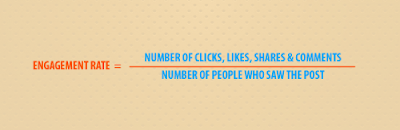
The good news is engagement rates – particularly virality – have doubled, if not tripled. This makes sense – if Facebook is showing status updates to less people, but those people are the ones most likely to engage, then of course engagement rates will increase.
What Facebook have done is nothing new. Take search as an example. You can put a lot of resource into SEO and use organic search to reach a small group of people who are likely to engage with your brand and not spend a cent on media. Or you can extend your search strategy using media budget to by paid search placements which extend your reach to a much broader – but arguably less interested – audience knowing that at least some of them will engage.
Facebook is no different. Focus on your conversation strategy and you’ll engage with a small group of brand loyalists. Invest in paid media and you’ll extend your reach to a broader, but less engaged, audience.
There are plenty of articles out there on how brands should respond to these changes. Here’s what I think:
1.    Differentiate between reach and engagement. Your conversation calendar drives engagement, your paid media drives reach and growth. If you aren’t supporting your page with paid media, you shouldn’t have reach or growth KPIs.
2.    Engagement is now critical. If you can't support your page with paid media, then you will need to build interactivity (like, comment, share, vote) into your status updates. This will ensure those you are reaching remain engaged, and when you hit that sweet spot with a post that gets great interaction rates your reach will extend to your wider fanbase.
3.    Treat your Facebook page like paid search. Have an always on media budget and upweight when you are in campaign. Buy reach through promoted posts and sponsored stories - but stick to targeting fans only and don't promote every single status update. Just pick the ones that are most important, engaging and on-brand - and make sure they encourage interaction.
4.    Consider your conversation calendar as your engagement strategy. Don’t just turn to building an app for everything. Think about whether you can use interactive conversation to achieve your objectives, or put your app development budget into creating other forms of content.
5.    Integrate your conversation calendar and your paid media schedule. If these are managed by two different people, tell them to get together regularly and plan how one can support the other to deliver the best possible result for the brand.
Brands have had it pretty good on Facebook. They’ve been able to build substantial communities of consumers and been able to engage with them like never before without huge investment. As result the playing field has been leveled - small brands can be just as powerful as their bigger competitors. 
So if brands want to continue to harness the power of Facebook, it’s time to put up. Put up the time. Put up the effort. And put up resources – both human and financial – that are needed to make this channel a success.

Thursday, September 27, 2012

Keyword Targeting and the Chaff


Time for a good old fashioned blog post.  You know, the kind that is more knee jerk than it is carefully thought out.  Reactionary you might say.  The kind of one that could very well end up as a rant and that I may well regret when I wake up at 4am thinking about it.

It’s been a very busy, but in the main actually quite fun, day managing a client announcement that they are retiring a brand and merging the business attached to it into another brand.  Due to the timing, legal requirements and sensitivities of the announcement we were left having to implement some of the digital layers at relatively short notice, including some keyword targeting.  Which has unexpectedly helped sort the wheat from the publishing partners chaff.  

Credit where credit is due first.  nzherald, MSN and AdHub – all provided excellent account and technical service, fine tuning the campaign on the fly with me to have it running to order within two hours of letting them know it was happening.  Installing in me a sense that I’m working with true partners that care about helping us achieve our clients goals.

But then there was the chaff.  Despite some good account service, another main news portal and a main email portal were nothing short of technically hopeless.  For the love of Jesus, all I was asking for was either some effective keyword targeting, or them tagging the relevant stories to then serve my ads into them.  This is basic, 2007 stuff.  The kind of options these sites and their trafficking teams should be well and truly on top of.  I guess this is an old fashioned bad product story – confidence seriously eroded from bad experience.  One of them even suggested that their wasn’t enough money in it for them.  Okay, fair enough, your business prerogative.  But maybe your eyes need testing?  It seems you’re a bit short sighted maybe.  Can you read the letters in the middle of the chart?

And, as an aside, what an interesting study of the value of brand today has been.  While the services that the retired brand have been offering to customers will not change (only the colour of the buildings and bank statements, with all the staff remaiing the same) I’ve seen a steady stream of comments on web sites of people declaring their undying love for the retired brand and a determination to move to another supplyer.  Ah yes, irrational consumer choices based on brand loyalty, the ad industry loves you for them.  Anyway, time to get in my 3ltr, 4WD Subaru Outback and take the perfectly well sealed road home.

Friday, September 21, 2012

Rad Report #3

It's awards season, so here is:

My Judging Experience of Random Ads I Found
(I also bring to you today tales of Sasquatch and a Lady Pyramid… intrigued now aren’t you…)

SLURPEE
AUSTRALIA
This one ticks so many boxes: simplicity, user-generated ideas, word of mouth and definitely fun. 

Rather than identifying how to make the product different to the competitors Slurpee instead looked how they could make the experience different for the consumers by realising that the one thing that always stays the same with frozen drinks is the cup. 

But what if you could drink it out of a trumpet?  A megaphone?  A bathtub?  (Okay with that last one you’d probably have brain freeze and diabetes…)

Slurpee asked people what they’d use, and the best suggestions were made into an outdoor, instore and print campaign promoting a day where you could fill your own vessel for the price of a regular drink.

The day before the event they also did a nice little bit of guerrilla advertising using other companies’ outdoor ads.  The buzz generated and the results speak for themselves.


UNITED COLORS OF BENETTON
ITALY
Some of you may have already seen this one, but I think it’s a really fantastic message executed in a simple way that generates talkability (and controversy).

Benetton are famous not only for their fashion line but for a very open approach to a social responsibility of equality and peace.  The Unhate Foundation was created to overcome the culture of hate on a global level through basic understanding of difference in a pretty open and emotive way. 

Here’s the video: http://www.youtube.com/watch?v=S8N2GX6of2I and if you’ve got the time check out their page: http://unhate.benetton.com/

The campaign created a huge amount of controversy with a number of different groups as the central theme is the kiss, the most universal symbol of love, and Benetton ran creative featuring world political and religious leaders, such as Barack Obama and Chinese leader Hu Jintao, Pope Benedict XVI and Ahmed Mohamed el-Tayeb, the Palestinian president Mahmoud Abbas and the Israeli prime minister Benjamin Netanyahu.

They also ran guerrilla outdoor activity in Milan, New York, Paris and Tel Aviv, and Unhate went on to win the Press Grand Prix at Cannes.


FRIDAY FLUFF PIECE
JACK’S LINKS & FOOTLOCKER/ ADIDAS
USA

We all know creating a recognisable character association with a product can help to educate, inspire, entertain or personify the brand.  Whether that means celebrity brand ambassador or unique personality it can help the brand connect with the consumer.

You of course all know this after rushing out to buy Cornettos after seeing my awesome Cornetto bear, didn’t you… didn’t you...

Anyway, here are a couple of other brands that went for a… unique spokesman to make them memorable.

Okay fine, they’re also in here because I’m more than a little immature and personally find the words ‘sasquatch’ and ‘lady-pyramid’ hi-(wait-for-it)-larious.

Jack’s Links:                 

Footlocker/ ADIDAS:     


Happy Friday everyone!